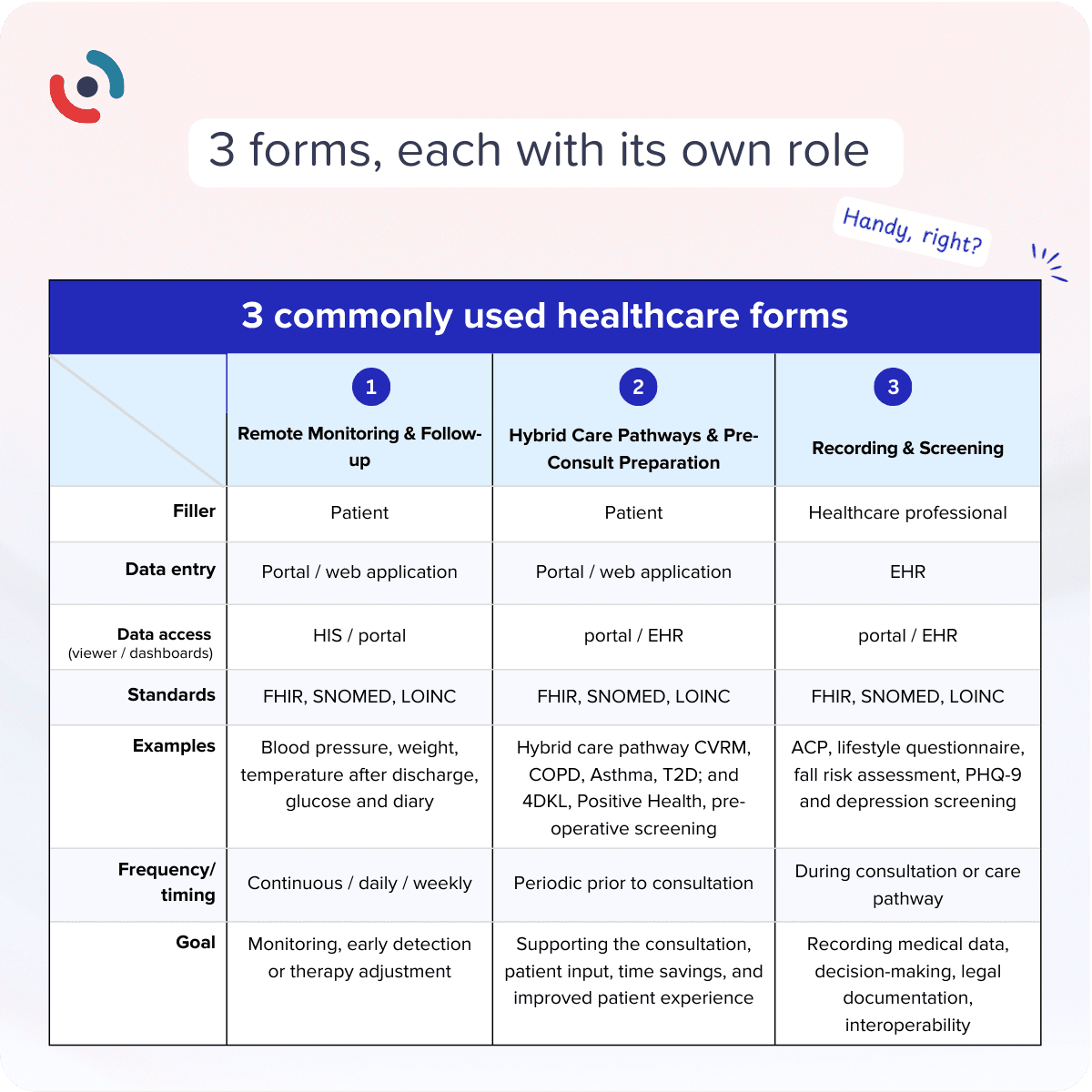

Patient education is often seen as something extra alongside care delivery, while it can actually be a powerful component of digital care pathways and hybrid care. By providing the right information at the right moment, patients are better prepared for consultations and more actively involved in their treatment or lifestyle changes. This is not only valuable when problems arise, but especially in the preventive phase.
Digital care pathways that improve preparation, self-management, and prevention
Tailored information within the care pathway
Digital information pathways make it possible to structurally embed patient education into the care process. Think of topics such as smoking cessation, menopause, or weight management, offered through text, video, and trusted resources. Patients receive clear, step-by-step guidance aligned with their position in the care pathway. This strengthens hybrid care: digital where possible, personal where needed.
Key benefits at a glance
The impact can be seen on multiple levels:
Better prepared patients and more meaningful consultations
Broader reach, also beyond in-person visits
Greater patient engagement and self-management
Consistent, validated information for every patient
Time savings for clinicians during consultations
Stronger focus on prevention instead of only treatment
From standalone information to integrated care
By integrating patient education into digital care pathways, information is no longer a separate add-on but a core part of care delivery. The result: better informed patients, more efficient consultations, and more room for personal attention where it matters most.
Scalable and measurable deployment
For healthcare organizations, this also means patient education can be deployed at scale and monitored effectively. You can see who completed which content, where patients drop off, and where additional support may be needed. This turns patient education into not just an informative tool, but a strategic instrument to continuously improve care pathways.